












Ruby Style Illustrations
Ruby keeps product screens clear with stripped down vector lines and ruby highlights. Use it when interfaces need friendly functional scenes that sit quietly beside navigation and data.



What is Ruby Style?
The palette stays controlled with neutral grays and occasional ruby accents defining focus. Simplified outlines and rounded corners keep shapes approachable. Flat fills maintain clarity even at small interface sizes.
Marketing and product teams use Ruby for onboarding flows and support articles. Lightweight feature diagrams in help centers benefit from the clear icons. SaaS founders drop it into pitch decks and landing pages.
In product UI and content


Ruby collections




What Ruby artists draw
Workplace dashboards and focused collaboration scenes appear throughout Ruby. Abstract data flows show up too, so browse tags and jump straight into devices or teamwork concepts.
Narrowing down your Ruby alternative
Comparing nearby line styles helps you decide how much graphic detail should accompany your product story and interface copy.

Bonbon Line uses thicker strokes and softer pastels, so scenes feel friendlier and less strictly product focused than Ruby.

Company leans into business formality with more structured characters and denser props, while Ruby keeps compositions lighter for interface use.

Little brings tiny proportions and exaggerated heads for a cuter tone, whereas Ruby maintains more neutral professional bodies.

Cut applies sharp angles and bold block fills. Ruby instead relies on smooth curves and sparse color hits.

Whimsy pushes playful distortions and narrative scenes. Ruby focuses on straightforward metaphors that explain product features without extra storytelling.

Amethyst swaps Ruby’s ruby reds for purple highlights and slightly richer shading, giving interfaces a moodier yet still minimal aesthetic.

Line stays almost monochrome with very few accent tones, so Ruby feels more directional for highlighting key actions.

Weekday centers everyday office narratives with more environment detail, while Ruby emphasizes simplified props and characters cropped tightly.

Token abstracts people into symbols and icons. Ruby keeps recognizable figures and devices that still read clearly in small spaces.

Delesign includes richer scenes and more varied palettes. Ruby stays limited, which suits systematic UI libraries and documentation.

Teams concentrates on collaborative office culture with expressive faces and gestures. Ruby simplifies expressions for cleaner alignment with data heavy layouts.

Typography weaves large text and letterforms into scenes. Ruby instead keeps illustrations separate, so designers control how type appears.
Frequently asked questions


Start using Ruby illustrations today
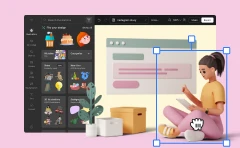
Grab PNG files for quick mocks or subscribe for SVG control. Drag Ruby scenes into Figma or Sketch. Use the Pichon app to finish onboarding flows and help pages faster.