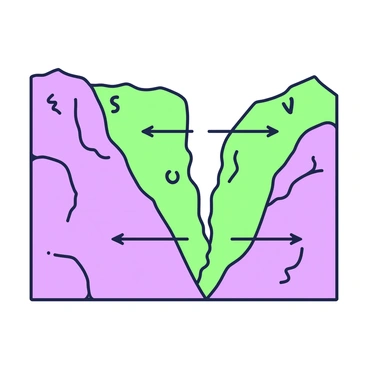
Strike slip fault illustration and detailed visual representation of geological processes

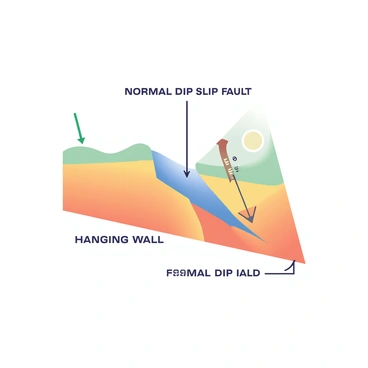
A strike slip fault illustration demonstrates the movement between tectonic plates. This illustration of strike slip fault provides insight into geological formations. Understanding these faults is crucial for predicting seismic activity. By studying the characteristics of these faults, geologists can better assess risks associated with earthquakes and other geological phenomena, enhancing safety measures and preparedness.


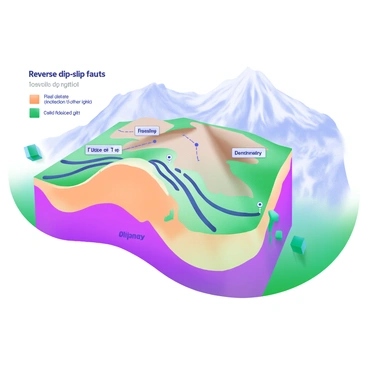
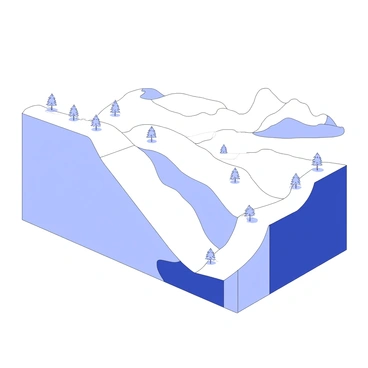
A cross-sectional view of a reverse dip-slip fault is illustrated, showcasing distinct rock layers. The layers are arranged one above the other, indicating how they have been pushed together due to tectonic forces. On the left side, the lower layer is elevated, creating a visible upward displacement. The rock formations display varying textures and patterns, emphasizing their geological differences. The fault line is clearly marked, and small arrows indicate the direction of movement, demonstrating the compressional forces at work.A modern pastel illustration depicting a "strike-slip fault" with colorful abstract elements. The image features two sections of land represented by wavy lines that shift horizontally, creating a visible displacement. Surrounding the fault line are vibrant red and blue shapes symbolizing tectonic plates, with arrows indicating movement direction. Textures and gradients enhance the visual interest, showcasing patterns that mimic rocky surfaces. Soft pastel colors dominate the background, allowing the fault and its elements to stand out prominently.A backyard garden filled with various plants and flowers, neatly arranged in rows. In the center of the garden, there is a small strike-slip fault, represented by a visible crack in the ground that runs horizontally across the garden. Surrounding the fault are patches of rich soil, vibrant foliage, and blooming flowers. A garden path made of stones leads through the garden, while a wooden fence encloses the area, adding structure to the scene. The overall arrangement highlights the contrast between the lush greenery and the geological feature of the fault.A dynamic ecosystem is thriving near a reverse dip-slip fault zone. In the foreground, a variety of plants, including tall grasses and shrubs, display resilience against the rocky terrain. The ground features exposed layers of soil and rock, showcasing the geological activity of the fault. A small stream runs through the area, reflecting the surrounding greenery. Birds are perched on nearby trees, and small animals are foraging among the underbrush, contributing to the area's biodiversity. In the background, the fault line rises sharply, creating a dramatic landscape that highlights the geological significance of the region.
Nothing found in the community